

Fostering children with disabilities requires compassion, not medical degrees. Learn how Mentor Foster Care supports Mentor foster parents. Contact us.
Opening your home to a child who needs extra support is one of the most meaningful decisions you can make. Feeling called to foster children with disabilities is a journey often referred to as fostering special needs. You don't need a medical degree or professional credentials — your compassion, commitment, and willingness to undergo some skill development are enough.
Below, you'll find answers to the most common questions and an honest look at what this journey really involves. Whether you're wondering about qualifications, financial support, or the role you'll play, this guide is here to help you take the next step with confidence.
What Is Considered a "Disability" or "Special Need" in Foster Care?
Special needs foster care refers to any child who requires extra support beyond what a typical placement provides. It includes those with physical, developmental, medical, or emotional disabilities. More than 1 in 4 children in foster care have a diagnosed special healthcare need, and no two children are the same.
Examples of these needs include a child with:
- A physical condition, such as a mobility disability or a need for adaptive equipment.
- Developmental disabilities or delays, such as autism spectrum disorder or Down syndrome.
- A complex medical condition that requires specialized equipment or regular medical procedures.
- Significant emotional or behavioral challenges that stem from trauma they've experienced.
The type of support a child needs varies widely. That's where Mentor Foster Care comes in. We offer various types of foster care designed to meet each child exactly where they are.
The Unique Rewards of This Journey
This isn't a journey defined by checklists or clinical outcomes. It's defined by relationships and growth. You might be the person who sees a child reach a milestone they were told they couldn't. You might watch a child who once struggled to trust anyone learn how to open up, laugh, and feel safe.
The reality is that research shows children with disabilities in foster care are less likely to find permanent homes. That makes a committed Mentor foster parent all the more vital. You become the stable presence in a child's story. You become their advocate in rooms where decisions are made and create a home where a child can simply be a child.
For those considering medically complex foster care, the reward often comes in the quietest moments. You will feel it when watching a child thrive in a home setting after months in a hospital or when seeing them feel loved, seen, and supported every single day.
Answering Your Key Questions About Fostering Children with Disabilities
Here are honest answers to the questions we most often hear from people considering this path.
Do I Need to Be a Doctor or Nurse?
No. You don't need any medical background or professional credentials to become a Mentor foster parent for a child with disabilities. Most Mentor foster parents aren't medical professionals, and that's completely OK.
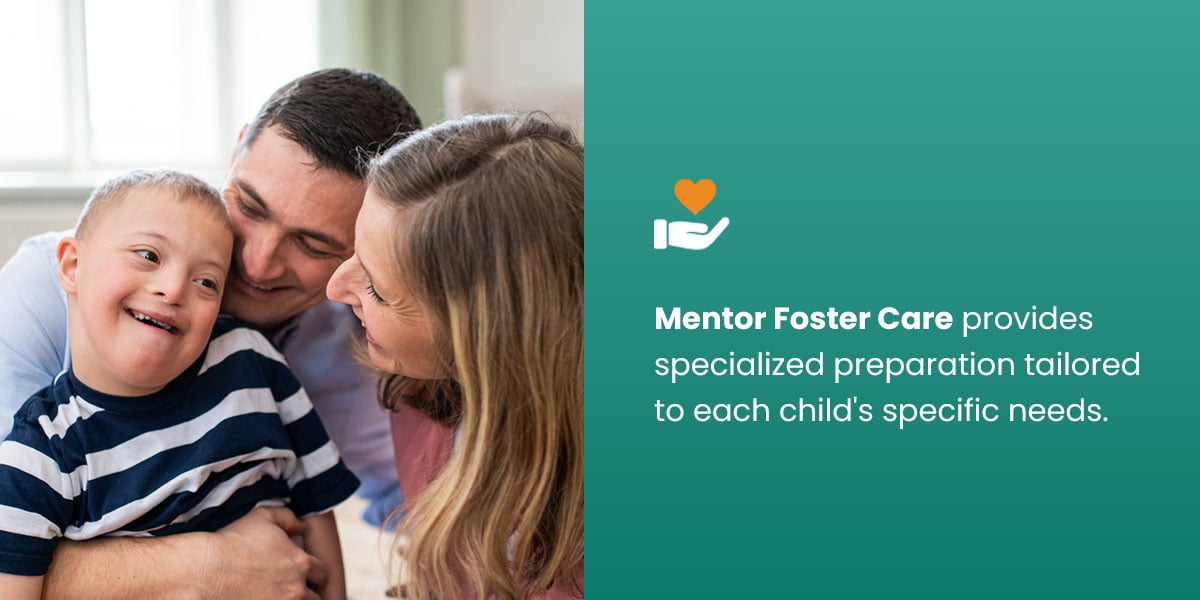
What you do need is a willingness to learn and a commitment to the child you support. Mentor Foster Care provides specialized preparation tailored to each child's specific needs. Our team offers hands-on guidance, ongoing skill development, and 24/7 support so you feel confident from day one. You'll have access to experienced professionals who walk with you every step of the way.
This isn't about having all the answers before you start. It's about showing up with care and compassion. If that sounds familiar, we're looking for caring people just like you.
What Financial Support Is Available?
Children with documented disabilities or medical needs often qualify for tiered stipend rates. These rates may be higher than the standard base rate to help offset the costs of specialized equipment, appointments, and transportation.
Stipend rates vary by state and by the level of support a child requires. The best way to understand what's available in your area is to reach out to our team.
It's important to note that Mentor foster parents are independent contractors, not employees. Stipends are designed to cover the costs of supporting a child, not as a salary.
What Are the Biggest Challenges?
Let's be honest. Coordinating multiple medical appointments takes time and patience. Navigating healthcare and school systems on behalf of a child can feel overwhelming, especially at first. And holding space for a child who carries the weight of trauma requires emotional resilience.
The challenges of fostering children with special needs are real. That's exactly why Mentor Foster Care's team walks with you at every step. You're never figuring this out alone. You'll have caseworkers, specialists, and experienced professionals who understand what you're navigating and how to help. The challenges don't disappear, but support helps you navigate them.
Your Role as an Advocate and Team Member
Through our foster care services, you're part of a team built around the child. Your role is one of the most important.
Building Your Child's Support Team
You are not alone in this. A child in care is surrounded by a team that includes caseworkers, therapists, medical specialists, and school staff. You, the Mentor foster parent, are at the center of it all.
You're the steady presence a child can count on, someone who knows them best and understands what they need. You bridge every part of the team, ensuring we are all working toward the same goals.
This is the community narrative in action. You're part of something bigger. Together, the team helps a child grow, heal, and reach their full potential.
Advocating in School and Healthcare Settings
One of the most impactful roles you'll play is as an advocate. In schools, that often means attending meetings to ensure the child's educational needs are met. You'll also make sure their voice is represented at the table.
On the medical side, you'll coordinate with doctors and communicate the child's history and ongoing needs. This ensures continuity of support across providers. You help create consistency and make sure a child’s needs are heard, understood, and supported.
Advocacy isn't about having all the expertise — it's showing up, asking the right questions, and making sure a child gets the services they need to thrive.
Start Your Journey as a Mentor Foster Parent

This journey doesn't require medical expertise or a perfect background. It requires a loving, stable home. That's what every child in care deserves and what a Mentor foster parent provides.
At Mentor Foster Care, we support Mentor foster parents through medically complex foster care programs designed to meet each child's unique needs. We are people serving people, and we believe every person has the right to live well.
If you feel called to open your home to a child in care, we'd love to hear from you. Reach out to our team today.